
As the year comes to a close, we reflected on all the brand crises of 2023. Bank failures, worker strikes, unionization efforts, broken ticketing systems, layoffs, boycotts, you name it, people read about it. While there’s lots of lessons across the board, some of the biggest learnings come from crises that were self-induced. By that I mean, crises that could have been avoided by taking a beat.
Our top 3 all fell in the last few months of the calendar year and all included missteps we can all learn from. Here’s the countdown:
3. Carta CEO brings attention to bad press
After a few news outlets covered Carta’s ongoing legal battle with former employees claiming mistreatment, the company’s CEO posted an internal email outlining why he disagrees with the coverage and then sent an email to Carta’s entire customer base pointing to the public post.
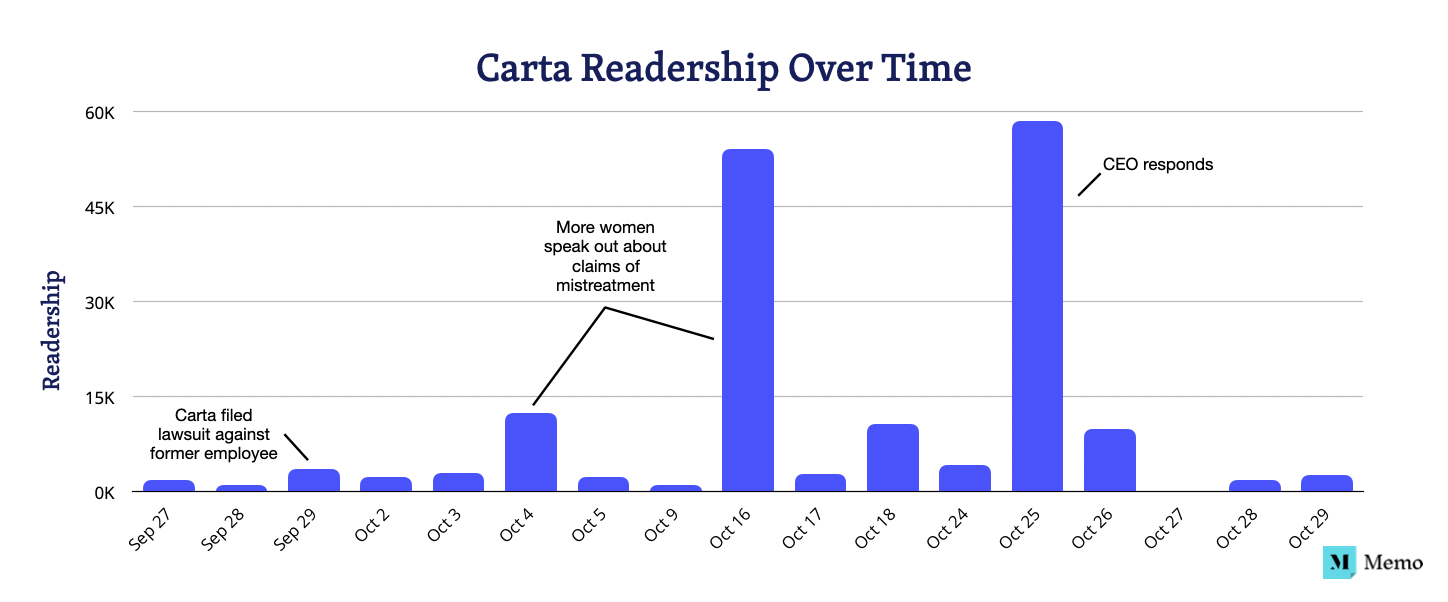
The fact that an email to customers was sent in the first place is a classic example of a leader assuming their world is the world. Readership around the legal battle died down prior to the CEO’s email. Coverage of his response not only revived the news cycle, readership of his response also eclipsed the original issue receiving bad press.
Lesson: Make sure you’re actually still in crisis before you respond. Otherwise, you risk bringing more attention to it.
2. OpenAI CEO gets fired by board and rehired with a new board
Breaking news the day Sam Altman was fired as the CEO of OpenAI generated more than 3x the readers as the company’s average news day. But it’s the chaos in the days following that attracted the bulk of readers. The board issued a statement with just enough detail to raise questions and not enough to quiet concerns. The board named an interim CEO only to name a new interim CEO days later, and then Altman rejoined the company as CEO shortly thereafter.

In total, the drama attracted over 28 million readers. People were most interested in the chaos that ensued following the shakeup, including over 8 million people reading about the company’s lead investor (Microsoft) and its employees standing behind the former CEO.
Lesson: Make sure all your key stakeholders are aligned with a massive shakeup before you announce it to the world. Revealing internal chaos will undoubtedly tarnish the brand even if the crisis itself only lasted a few days.
1. Bud Light’s response to anti-Pride backlash
Bud Light faced a boycott by conservative beer drinkers for featuring a trans influencer in its Pride Month campaign. The Bud Light boycott alone garnered over 46 million readers, mostly driven by the country musicians that kickstarted the boycott, the company’s response, sales falling as a result, and coverage around more brands getting caught up in similar backlash.
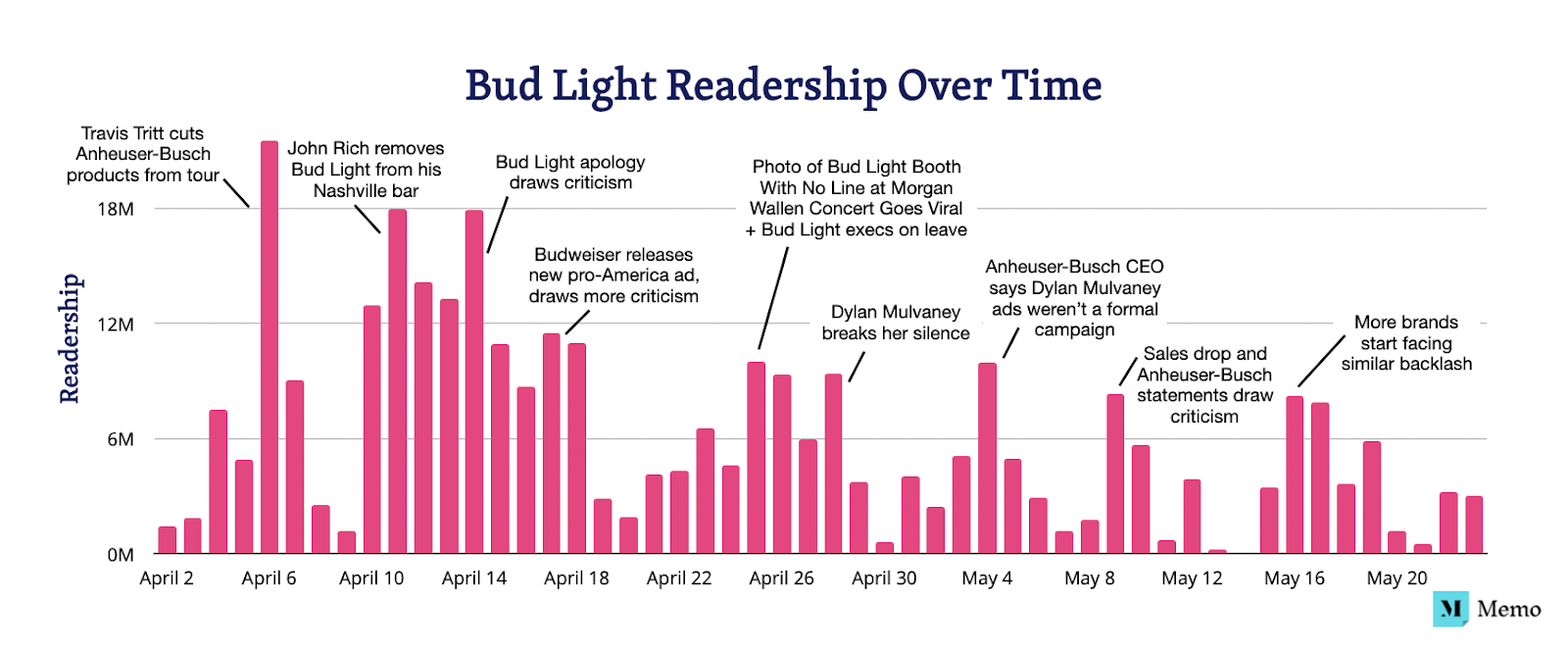
Instead of addressing the controversy immediately, Bud Light waited until the boycott began affecting its bottom line. Then when Bud Light apologized for upsetting some, it renewed the news cycle and ended up upsetting Pride supporters for backpedaling.
Lesson: Figure out what your stance is and stick to it. Every waver in your message can revive the crisis.
Key Learnings
Make sure your company is actually in a crisis before responding to it and alerting all your customers. If readership is low, don’t give the narrative legs. If you are in crisis, make sure key stakeholders and leadership are aligned on a path forward before communicating anything to employees or publicly. Internal chaos always becomes external chaos when you’re in a crisis. Finally, stand by the values and beliefs of your brand–even the slightest waver can cause more harm.